






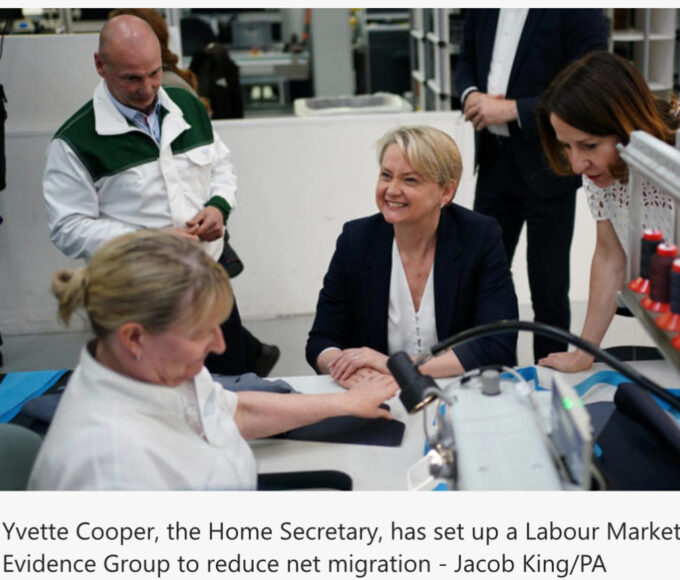
Migrants who are granted asylum face new curbs on bringing family members into Britain under a crackdown to be announced by Yvette Cooper.
The Home Secretary will use a Commons statement on Monday to try to seize back the initiative on migration after record small-boat arrivals this year and a growing public backlash over asylum hotels.
It follows a five-fold increase in the number of refugees’ family members granted visas to come to the UK, from 4,300 in 2023 to 20,600 in the year to this March, adding to a migrant housing crisis that has provoked nationwide protests.
With councils threatening to continue their battle to shut asylum hotels, she will assure MPs that the Government’s overhaul of the asylum system will mean an end to their use by the end of the Parliament in 2029.
Despite a record 29,000 migrants crossing the Channel so far this year, she will claim the National Crime Agency’s record 347 disruptions of people-smuggling gangs this year has contributed to the lowest number of small-boat arrivals in August since 2019.
The crackdown on refugee family reunions comes after The Telegraph revealed last month how the Red Cross was among charities paying for hundreds of families to come to the UK to be reunited with migrants granted asylum, despite growing concerns over housing shortages.
The Red Cross locates, advises and funds the travel costs of up to 1,000 family members a year to come from abroad to join people who have been granted refugee status.
Unlike other European countries, asylum seekers can sponsor wives, partners and children to come to the UK as soon as they are granted refugee status.
Under the changes, the Home Office said it would aim to bring the UK’s approach more in line with other countries in Europe and ease pressure on local councils where homelessness applications linked to the refugee family route had risen sharply in recent years.
Countries including Germany, Austria, Switzerland and Denmark have introduced mandatory waiting times of up to three years before refugees can bring over their families to join them.

Refugees seeking to bring over wives, partners or children will also have to ensure they have sufficient money as a unit to live without relying on the taxpayer.
Culled from: telegraph.co.uk








Leave a comment